Aftercare for the injection,not the operation
Search results for ChondroFiller recovery describe keyhole surgery: a brace, staged weight-bearing and months before sport. Professor Lee delivers ChondroFiller as an ultrasound-guided outpatient injection, and the aftercare he prescribes is built around that different procedure.
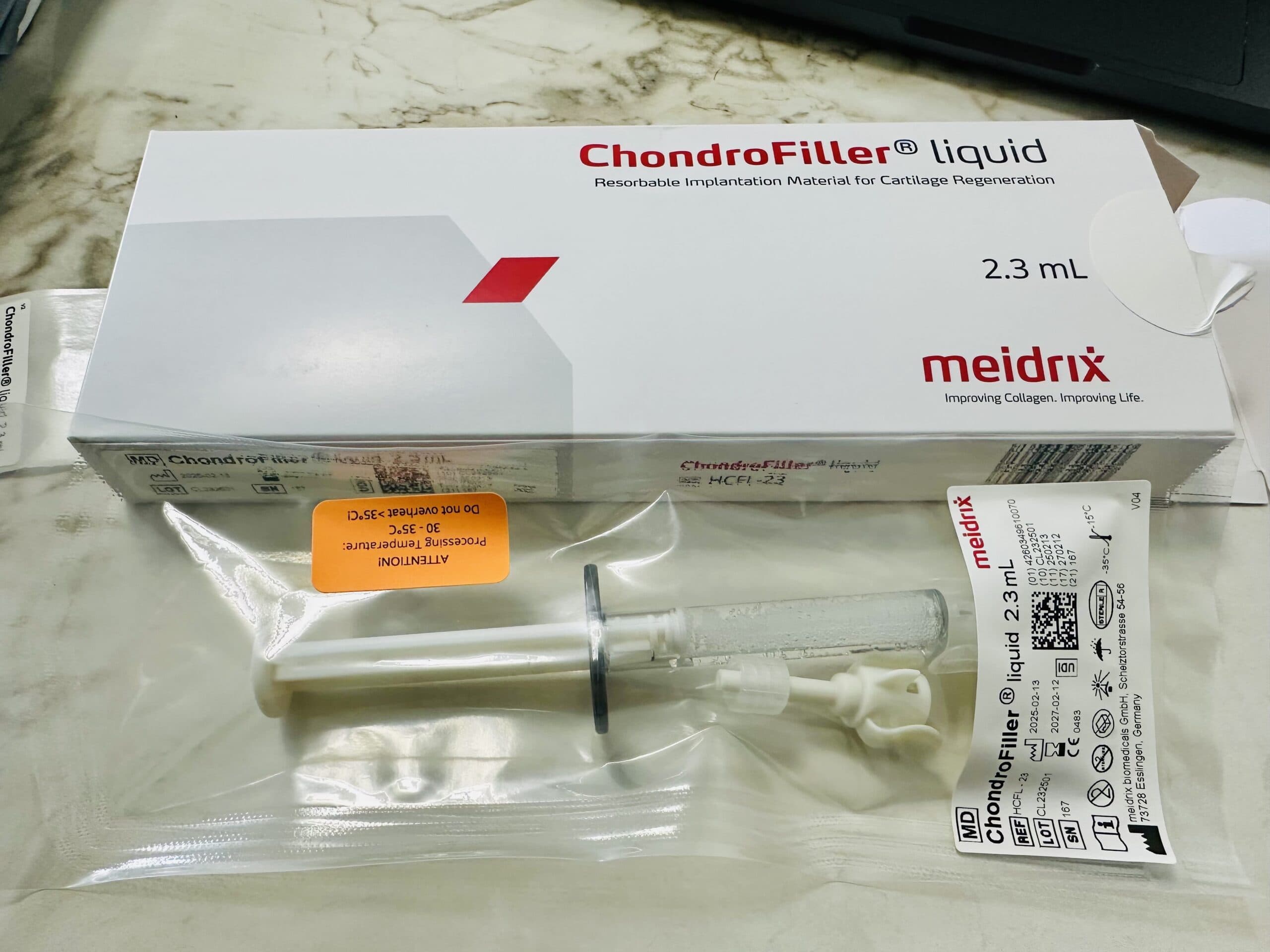
A scaffold that is injected should be recovered from as an injection, not as an operation.
Four decisions that shape the first six weeks
Each part of the aftercare follows from what the injection does and does not do to the joint.
No brace, no crutches
The gel is placed through a needle under ultrasound guidance. There is no incision to protect and no implant that needs to be held still, so the patient walks out of the clinic without crutches, unless the medical team specifies otherwise.
Three quiet days
Rest is a choice here, not a restriction. Light, necessary activity only, with ice through a cloth and the joint raised, while the gel begins to settle.
About half for two weeks
Roughly half the usual loading of the treated joint. Short, light walks are acceptable for a knee. Long walks, impact and targeted leg exercises wait.
Graded return
From week three, duration, distance and intensity rise in stages, with gentle strengthening added as advised, and the pace set by how the joint responds.
Two phases, and why the pace matters
The first three days are deliberately quiet: light, necessary activity, ice for 10 to 15 minutes through a cloth several times a day, and no massage or deep heat on the joint for a week. The dressing comes off the following day and the site is kept clean and dry.
After that, the aftercare follows the tissue. Professor Lee describes recovery in two overlapping phases rather than a single timetable.
The first two weeks
Integration phase
The gel settles into the defect. The aim is to give it a calm mechanical environment, which is why activity sits at about half of normal rather than at zero. Complete immobilisation is neither needed nor helpful for an injected scaffold.
Week three onwards
Repair phase
The patient’s own cells move into the gel and new cartilage tissue builds over many months. Because this is slow biology, improvement is gradual, and the load on the joint is raised to match it rather than to hurry it.
Why the recovery you found online is not interchangeable
One product name covers two different procedures. Most published rehabilitation describes the surgical one.
Anaesthetic and setting
- Injection
- Local anaesthetic, awake, outpatient
- Surgical implant
- Theatre, general or spinal anaesthetic
Brace
- Injection
- None
- Surgical implant
- Joint held in a brace for 48 hours
Walking and weight-bearing
- Injection
- No crutches unless the medical team specifies otherwise. Walking from the start, with a quiet first three days
- Surgical implant
- Weight-bearing rebuilt in stages over about six to eight weeks
Return to activity
- Injection
- About half by weeks one and two, graded over weeks three to six
- Surgical implant
- Staged over months
High-load sport
- Injection
- Rebuilt in stages as advised
- Surgical implant
- Six months or later
| Aspect | Injection | Surgical implant |
|---|---|---|
| Anaesthetic and setting | Local anaesthetic, awake, outpatient | Theatre, general or spinal anaesthetic |
| Brace | None | Joint held in a brace for 48 hours |
| Walking and weight-bearing | No crutches unless the medical team specifies otherwise. Walking from the start, with a quiet first three days | Weight-bearing rebuilt in stages over about six to eight weeks |
| Return to activity | About half by weeks one and two, graded over weeks three to six | Staged over months |
| High-load sport | Rebuilt in stages as advised | Six months or later |
The surgical column reflects manufacturer rehabilitation guidance for arthroscopic implantation. It is sound guidance for that operation. Applied to an injection it would impose restrictions with no purpose, and read by a patient who has had an injection it can cause real alarm. Professor Lee’s view is that the aftercare must match the procedure that was actually performed.
Review at six weeks, imaging at twelve months
Six weeks, free
A telephone review with the clinical team to assess activity levels and advise on next steps, at the point where the graded return is complete.
Twelve months
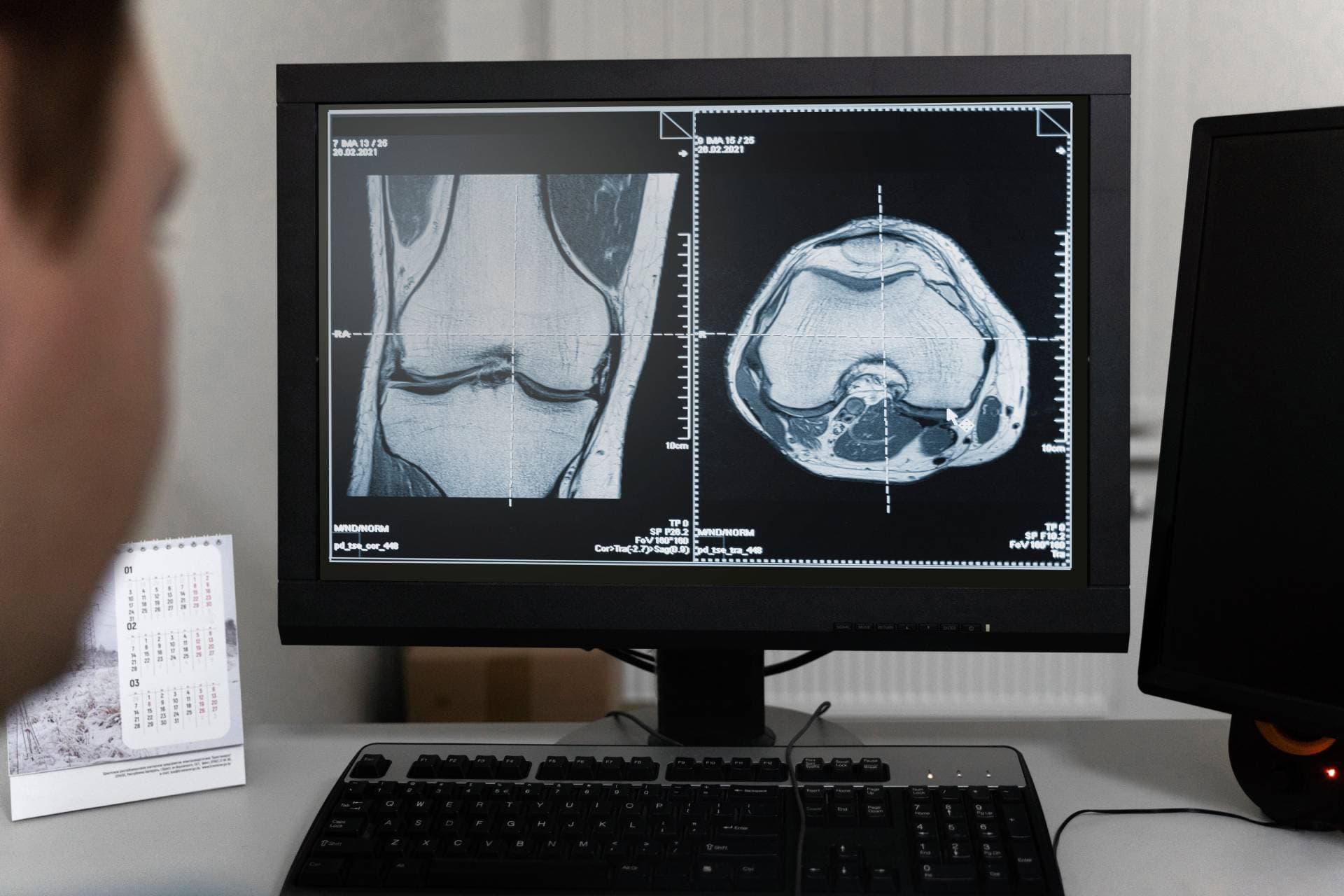
An MRI to assess cartilage regeneration and joint condition, reviewed at a follow-up with Professor Lee. Repair builds over months, so this is the point at which it can be judged fairly.
Expected symptoms, and reasons to call
Expected symptoms should gradually settle. The line between the two lists below is drawn clearly so that patients neither worry unnecessarily nor wait when they should not.
Expected
- Mild soreness, swelling or stiffness in the joint once the local anaesthetic wears off, after about six hours
- Swelling, tenderness, bruising or a little spotting on the dressing at the injection site
- A temporary flare of discomfort, stiffness or clicking as activity rises from week three
Contact the clinic
- Pain, swelling or redness in the joint that becomes severely limiting
- Bleeding or discharge from the injection site that continues
- A fever
- Any concern at all, however small
For patients: the London Cartilage Clinic ChondroFiller injection recovery guide sets out the week-by-week instructions and carries the downloadable aftercare leaflet. A personalised plan in the clinic letter always takes priority over general guidance.
This page explains clinical thinking and is not personal medical advice. See the ChondroFiller chapter for how the injection and surgical routes are chosen between.
Common questions
A brace protects a surgical implant while it is fixed and the wound heals. An injection involves neither. The 48-hour brace described in manufacturer rehabilitation guidance belongs to the arthroscopic implant, and Professor Lee does not apply it to the injection.
The gel settles best in a joint that is neither over-loaded nor immobilised. Gentle, light use keeps the joint moving while the first two weeks of integration take place. Targeted exercises and impact are held back until the gel has had that time.
A free telephone review with the clinical team at six weeks, to look at activity levels and agree next steps, and an MRI at twelve months to assess cartilage regeneration and joint condition, reviewed with Professor Lee. Formal follow-ups are arranged in between as required.
The clinic letter. This page explains the thinking behind the aftercare. A personalised plan takes priority over any general guidance, including the patient leaflet.
Related areas
ChondroFiller & Cartilage Regeneration
What the scaffold is, the injection and surgical routes, and how the choice between them is made.
Read more
Recovery Optimisation
Why recovery is part of the treatment, and how progression is structured.
Read more
Joint Injections & Orthobiologics
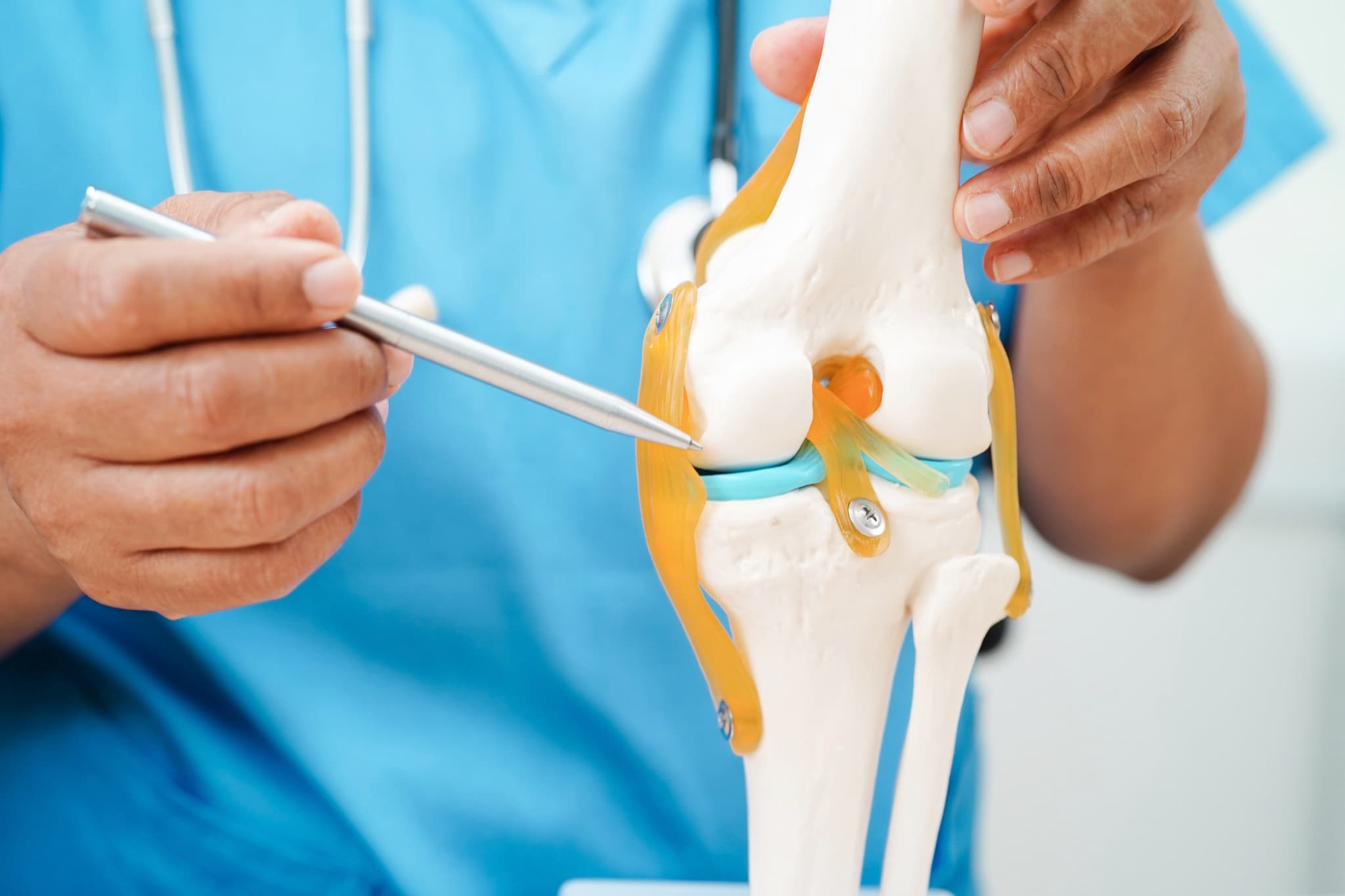
Where an ultrasound-guided injection fits among the options for a painful joint.
Read more
Recovery that fits the procedure
Aftercare for the ChondroFiller injection
If you have had or are considering a ChondroFiller injection, the aftercare should be explained plainly and matched to the treatment you actually receive.