Before Replacement
What should be considered before joint replacement becomes the default?
For many patients, the most important decision is not simply what comes next — but whether anything may still be possible before replacement becomes the only path discussed.
This page outlines the perspective Professor Paul Lee brings to that decision.

Not every joint is ready for replacement
Joint replacement can be life-changing when it is truly the right decision.
But not every painful joint has reached that point.
For some patients, there may still be a meaningful conversation to have around:
The challenge is that these decisions are often treated too routinely.
Professor Paul Lee's work is centred around helping patients and professionals think more clearly about what may still be possible before replacement becomes the default.
Why this question matters
Many patients arrive at this stage feeling that the pathway has narrowed too quickly. They may have been told:
For some, that may be true. But for others, the more important question is:
Has the right decision actually been made yet?
Because for many people, this is not only about pain. It is about:
When do people usually start asking this question?
Patients often seek this perspective when they feel they are entering a more serious stage of decision-making.
Worsening pain
Joint pain is worsening and beginning to affect daily life, movement, or independence.
Told replacement is next
They have been told that joint replacement may be the next step — and want to understand what else may still be possible.
"Not quite ready"
They feel they are not yet ready for replacement — but are unsure what the alternatives look like.
Seeking alternatives
They want to understand whether alternatives to knee or hip replacement exist for their specific situation.
Advice felt too quick
Previous advice has felt too generic, too rushed, or has not addressed the full picture of their joint.
Specialist second opinion
They want a specialist second opinion before committing to a major, irreversible decision.
Active and want to preserve
They are active, engaged in life, and want to understand what may still be preserved before accepting replacement.
What influences the decision before replacement?
This decision is rarely based on one thing alone.
It is not simply age, pain, or what an X-ray says in isolation. A more meaningful decision usually depends on understanding the wider picture.
Cartilage & Joint Surface
How much of the joint surface remains healthy, and whether the damage is focal or more widespread.
Meniscus / Structural Support
Whether important support structures are still functioning or have already been lost or compromised.
Joint Function
How the joint behaves in real life — not just what it looks like on a scan.
Activity & Expectations
What the patient wants to get back to, preserve, or continue doing.
Timing
Whether the window for preservation or repair is still open — or whether the joint has moved beyond that stage.
Overall Suitability
Whether preservation, repair, regeneration, or replacement is genuinely the most appropriate next pathway.
The 4 pathways before replacement
Professor Lee's approach is not built around trying to “do more” for the sake of it.
It is built around making the right decision first.
Preserve
Where the priority is protecting function, respecting tissue, and slowing unnecessary progression.
This may involve understanding how the joint is being loaded, what tissue remains healthy, and what can still be supported rather than sacrificed.
Repair
Where a structure or tissue may still be restored, stabilised, or supported before the pathway progresses further.
This may be particularly relevant in selected cartilage, meniscus, ligament, or joint preservation decisions.
Regenerate
Where biology, environment, timing, and tissue behaviour may still influence what is possible.
This is not about hype or promising the impossible — it is about understanding when regenerative principles may still have a meaningful role.
Replace
Where the joint has genuinely moved beyond the point where preservation, repair, or regeneration is likely to provide a meaningful answer.
Replacement can be the right decision — but it should be made clearly, not simply by default.

What makes this perspective different?
In many settings, decisions are understandably shaped by:
That can sometimes lead to decisions being made in a way that is too broad, too standardised, or too focused on the next default step.
Professor Lee's perspective is different because it asks a more specific question:
What is the most appropriate decision for this joint, at this stage, for this person?
That is often where more individual thinking becomes valuable.
When a second opinion may be worth having
A second opinion is often most useful before a major decision becomes fixed. Patients often seek this perspective when:
- they have been told replacement is the likely next step
- they are unsure whether they are ready for that decision
- they want to understand if anything else is still possible
- they feel the decision has been made too quickly
- they want a more specialist cartilage or joint preservation perspective
A second opinion is not about resisting replacement at all costs. It is about making sure the right decision has actually been made.
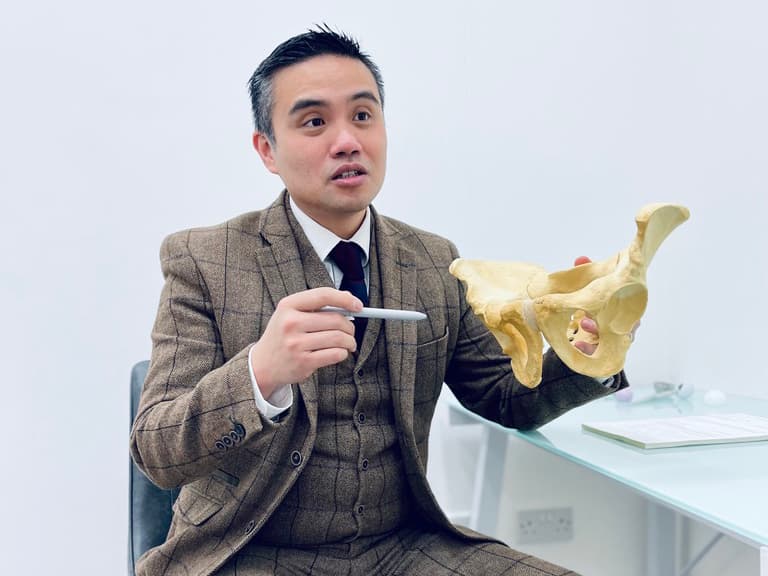 Specialist perspective before major decisions
Who this perspective is most relevant for
This page tends to resonate most with people who feel their decision may deserve deeper consideration.
Because not every joint should be placed on a standard pathway
For some patients, the most important decision is not simply whether surgery is needed.
It is whether the right type of decision has actually been made first.
That is the role of Before Replacement: to create space for more thoughtful, more individual, and more specialist decision-making before the pathway becomes irreversible.
Explore the next step
If you are looking for clinical assessment, treatment pathways, or specialist perspective before replacement, you can explore the relevant route below.

London Cartilage Clinic
For specialist cartilage, joint preservation, and before-replacement clinical pathways.
Visit London Cartilage ClinicClinical Assessment
For patients wanting to understand what may still be possible before replacement.
Explore Clinical PathwaysAbout Professor Lee
To understand the philosophy, background, and thinking behind this approach.
About Professor Lee