Hip Preservation& SPAIRE Hip Replacement
Hip arthritis sits on a spectrum. For some patients the right answer is preservation. For others it is replacement. When replacement is the right answer, SPAIRE makes it a meaningfully better operation — same implant, better surgical envelope, faster real-world recovery.
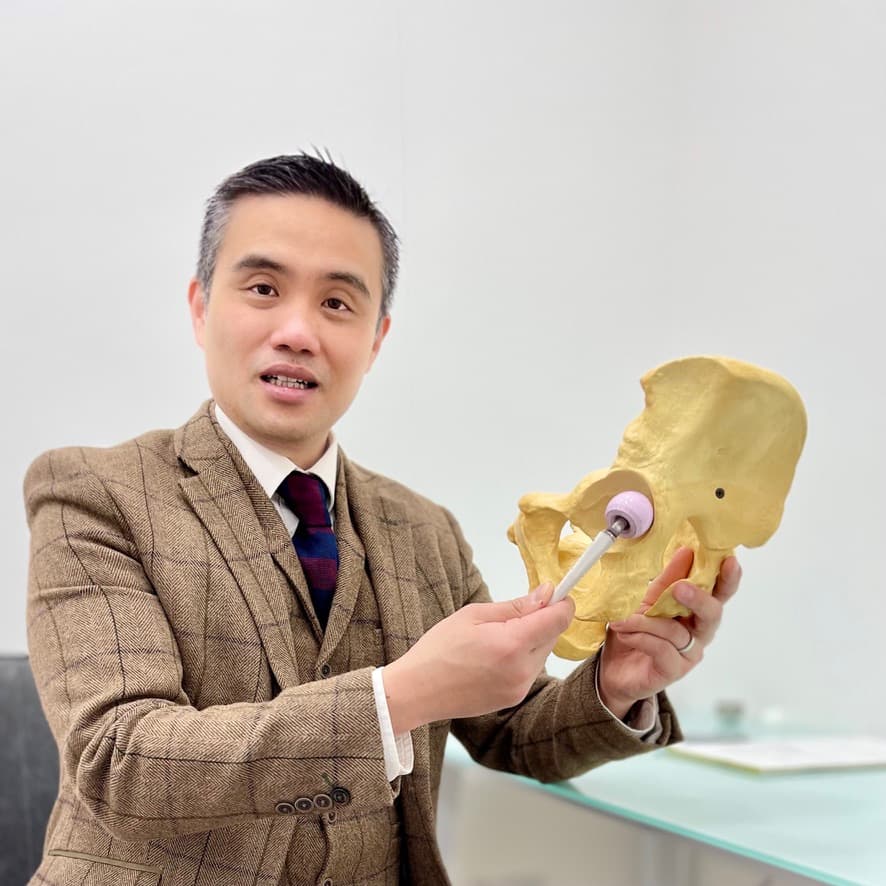
When replacement is right, do it well — and let the patient feel the difference.
Hip arthritis and preservation
Not every painful hip is a hip ready for replacement. There is a real preservation window in early and moderate arthritis where image-guided injections, biological treatments, and supportive structured rehabilitation can meaningfully change the trajectory.
The first question Professor Lee asks is not which operation — it is whether an operation is what this hip actually needs, at this point.
Signs preservation may still be the right strategy
- Pain mostly with specific activities, controllable with sensible loading
- A wide gap between what the imaging shows and what the patient actually feels
- Range of motion still largely preserved
- No deformity, no mechanical block, no rest pain
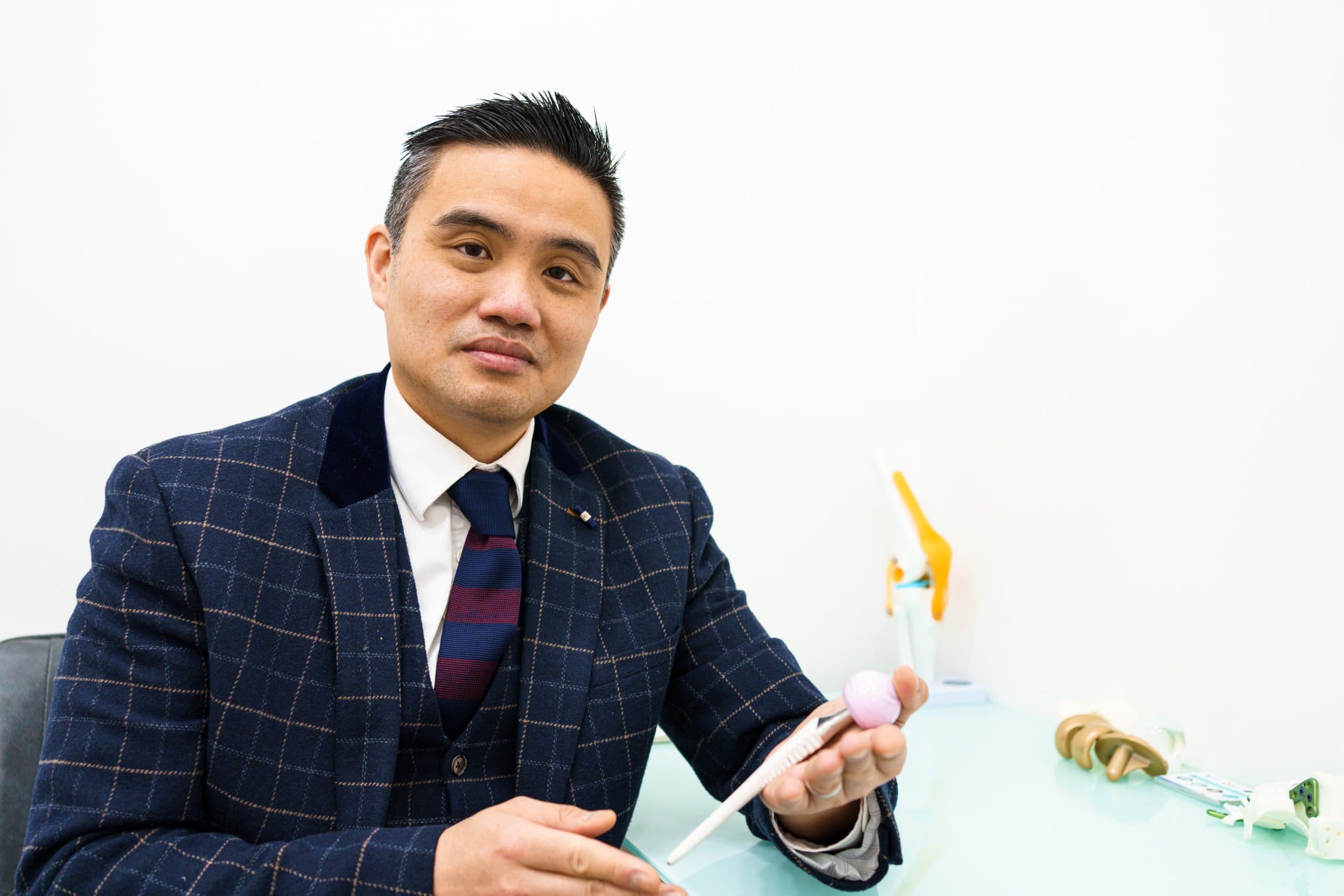
When hip replacement is necessary
Hip arthritis at the structural end of the spectrum has limited reversibility. At a certain point the soft-tissue and biological strategies have done what they can, and the question becomes how — and how well — to replace the joint.
The clinical signals that move the decision in that direction, taken together rather than in isolation:
- Persistent rest pain, night pain, or pain on every step
- Significant loss of motion that has stopped responding to physiotherapy
- Real-world function (walking, dressing, sleep) consistently reduced
- A patient who, after honest conversation, knows what replacement can do — and what it cannot
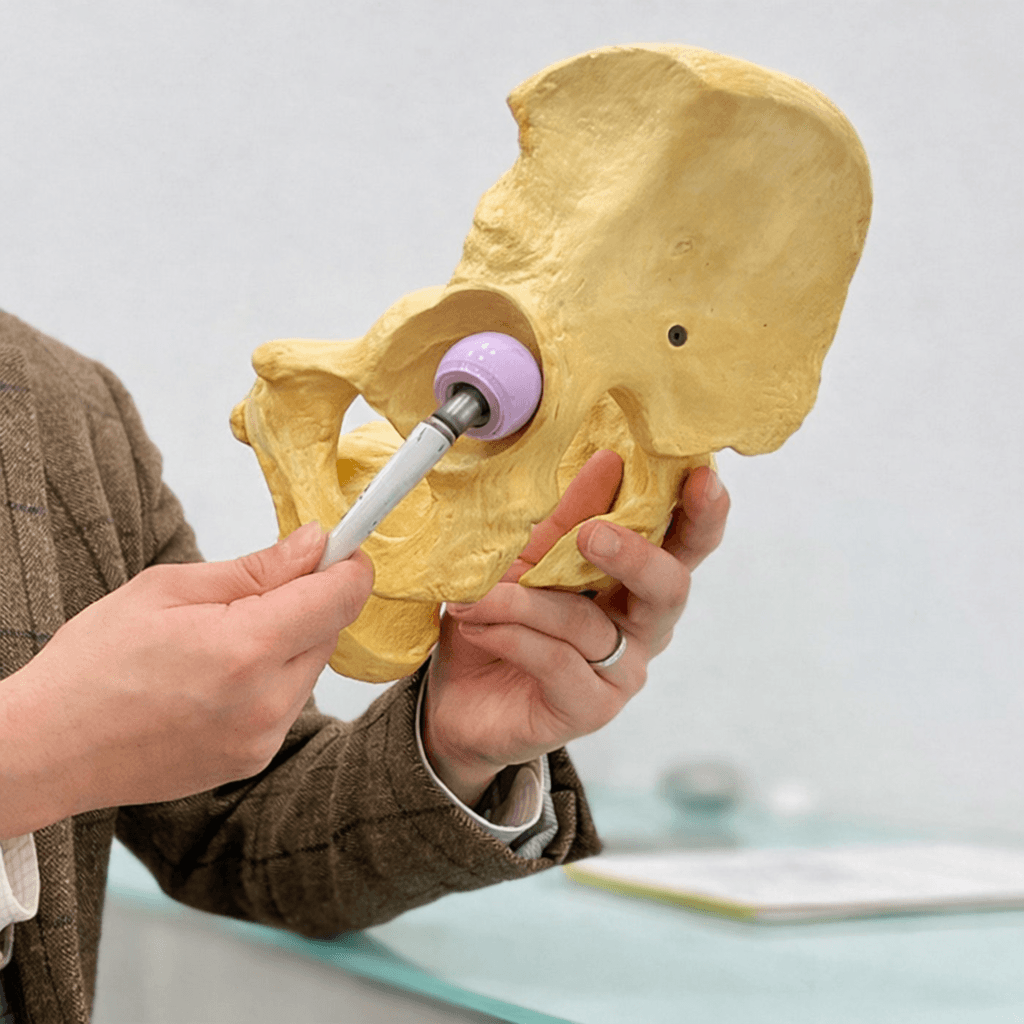
SPAIRE — what changes, and why it matters
SPAIRE refines the posterior hip-replacement approach by preserving the short external rotator muscles (piriformis, gemelli, obturators) and repairing the short external — muscles that traditional posterior approaches release entirely.
Those muscles do more than hold the hip together. They stabilise it, control its rotation, and protect against dislocation. Keeping them attached is what allows the post-operative pathway to look so different from traditional hip replacement.
Short external rotators preserved
Traditional posterior approaches release these key stabilising muscles. SPAIRE works around them — they stay attached, they stay functional.
Faster early mobilisation
Patients typically walk the same day, climb stairs within days, and progress through milestones earlier than traditional posterior pathways.
Fewer post-operative restrictions
Standard hip-precautions (no crossing legs, no sitting low, no bending past 90°) are largely unnecessary because the soft-tissue envelope is intact.
Same implant, better surgical envelope
SPAIRE is a technique difference, not a different implant. The hardware is conventional and well-evidenced; the surgical anatomy around it is what changes.
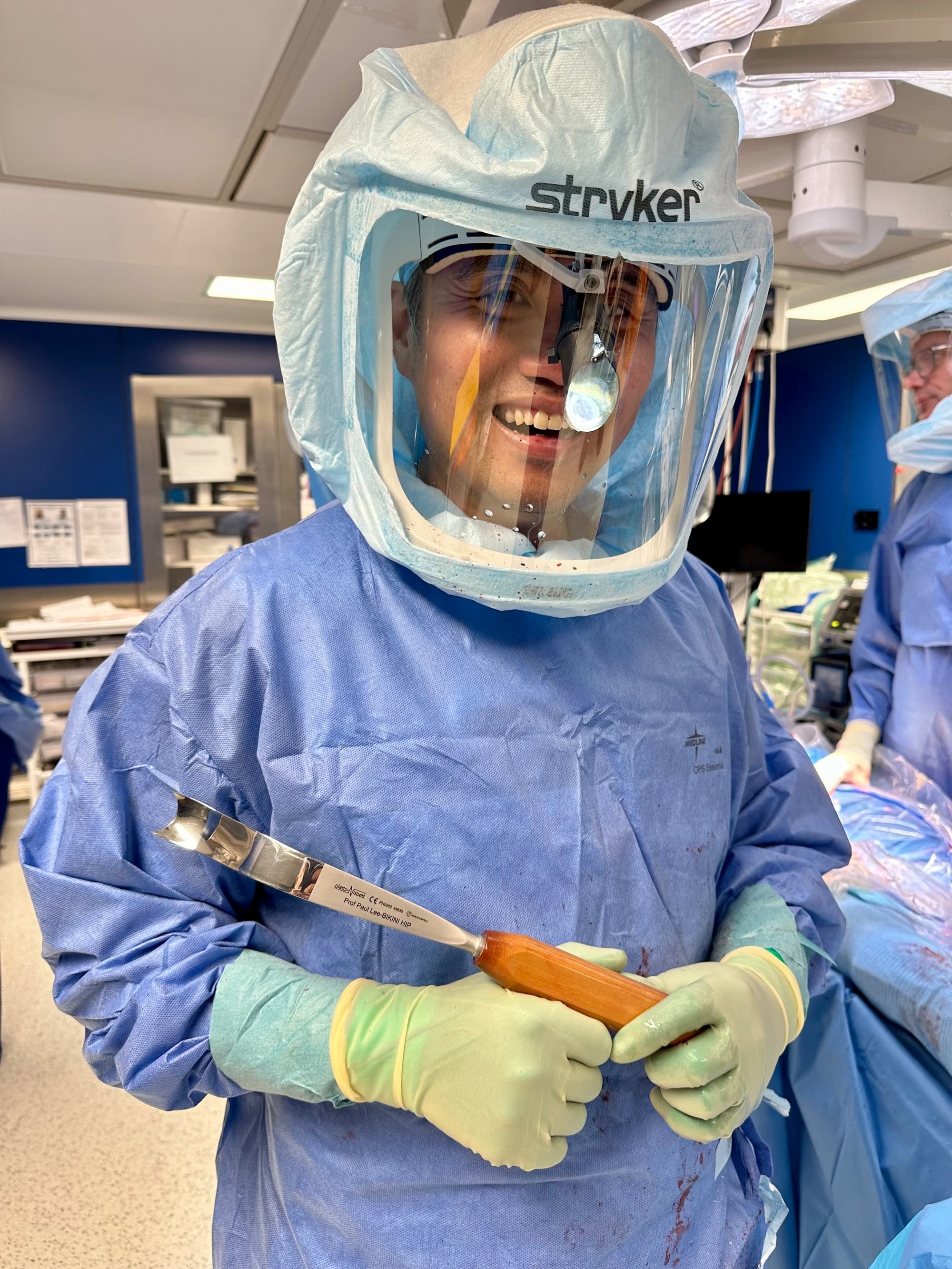
Faster recovery, with the soft-tissue envelope intact
Typical SPAIRE recovery milestones — every patient is different, but these are the real-world numbers most patients experience.
Phase 01
Day 0
Same-day walking
Stand and walk a short distance on the day of surgery, with appropriate support.
Phase 02
Day 1–2
Hospital discharge
For most patients, going home within 24–48 hours is realistic.
Phase 03
Week 1–2
Stairs and independence
Standard daily tasks become possible. Restrictions are minimal.
Phase 04
Week 4–6
Driving and work
Return to driving (right hip restored) and most desk work, often earlier than traditional approaches.
Phase 05
Month 3
Most activities
Walking, swimming, cycling, golf typically resumed. Higher-impact sport on a case-by-case basis.

Recovery optimisation — the rest of the operation
A well-executed SPAIRE replacement is the surgical contribution. The result — what the patient actually feels at six weeks, six months, and six years — is built across the recovery layer that follows.
Prehabilitation, sleep, nutrition, structured strength progression, and the systems-thinking that runs through Professor Lee's Regen PhD work are not optional extras. They are how a good operation becomes a good result.
Common questions
SPAIRE stands for Saving the Piriformis And Internus, Repair of Externus — a refined posterior hip-replacement technique that preserves the short external rotators rather than releasing them.
The implant is conventional. The difference is in how the surgical envelope is built and rebuilt, which is what allows faster recovery and fewer restrictions afterwards.
For most patients, yes — and meaningfully so. Same-day walking, discharge within 24–48 hours, and return to driving and routine activity weeks earlier than the traditional posterior pathway is now realistic, not exceptional.
What does not change is the underlying healing of the bone and the implant. Soft-tissue recovery is faster; biological osseointegration of the prosthesis follows its own timetable regardless of technique.
Most patients who are candidates for posterior hip replacement are candidates for SPAIRE. Specific anatomical factors (severe deformity, prior surgery, body habitus) occasionally favour a different approach. The decision is made on imaging and clinical assessment, not on patient preference alone.
The implant longevity is the same — the prosthesis is standard. SPAIRE is a soft-tissue technique, not a different implant. So the long-term performance of the replacement itself is governed by the same factors as any modern hip arthroplasty.
For most SPAIRE patients, the standard post-operative hip precautions (no leg crossing, no sitting low, no bending past 90°) are not required. That is the practical benefit of keeping the short external rotators intact. Your surgical team will confirm what applies in your case.
Related areas
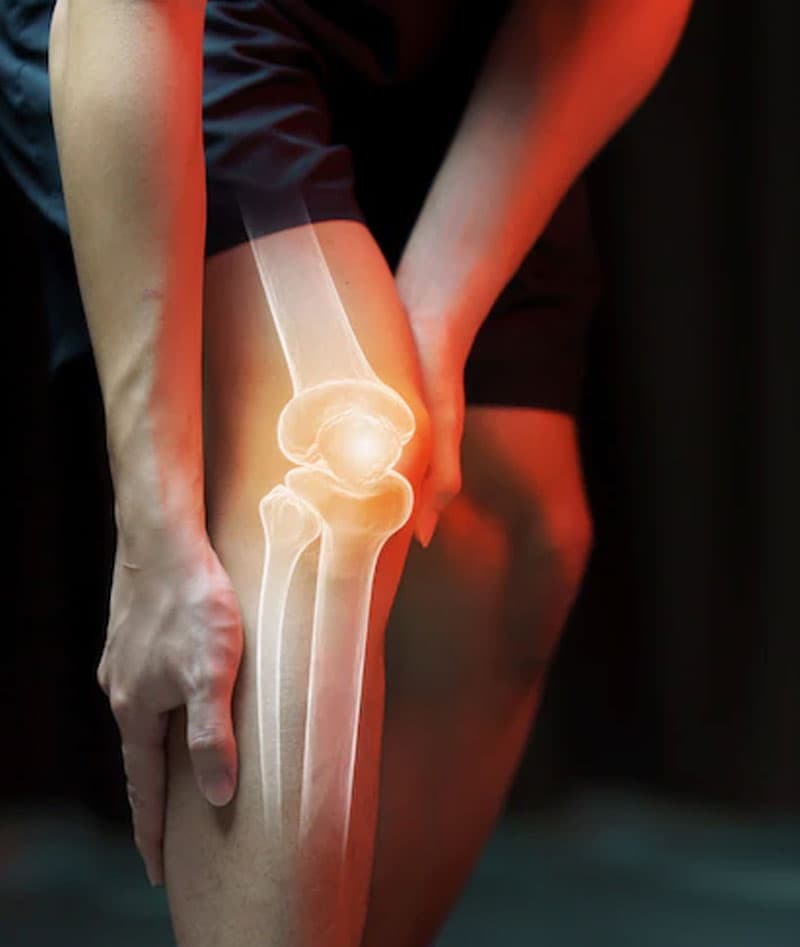
Knee Arthritis & Joint Preservation
The knee-side parallel — when replacement may be too early, and what preservation can still offer.
Read more
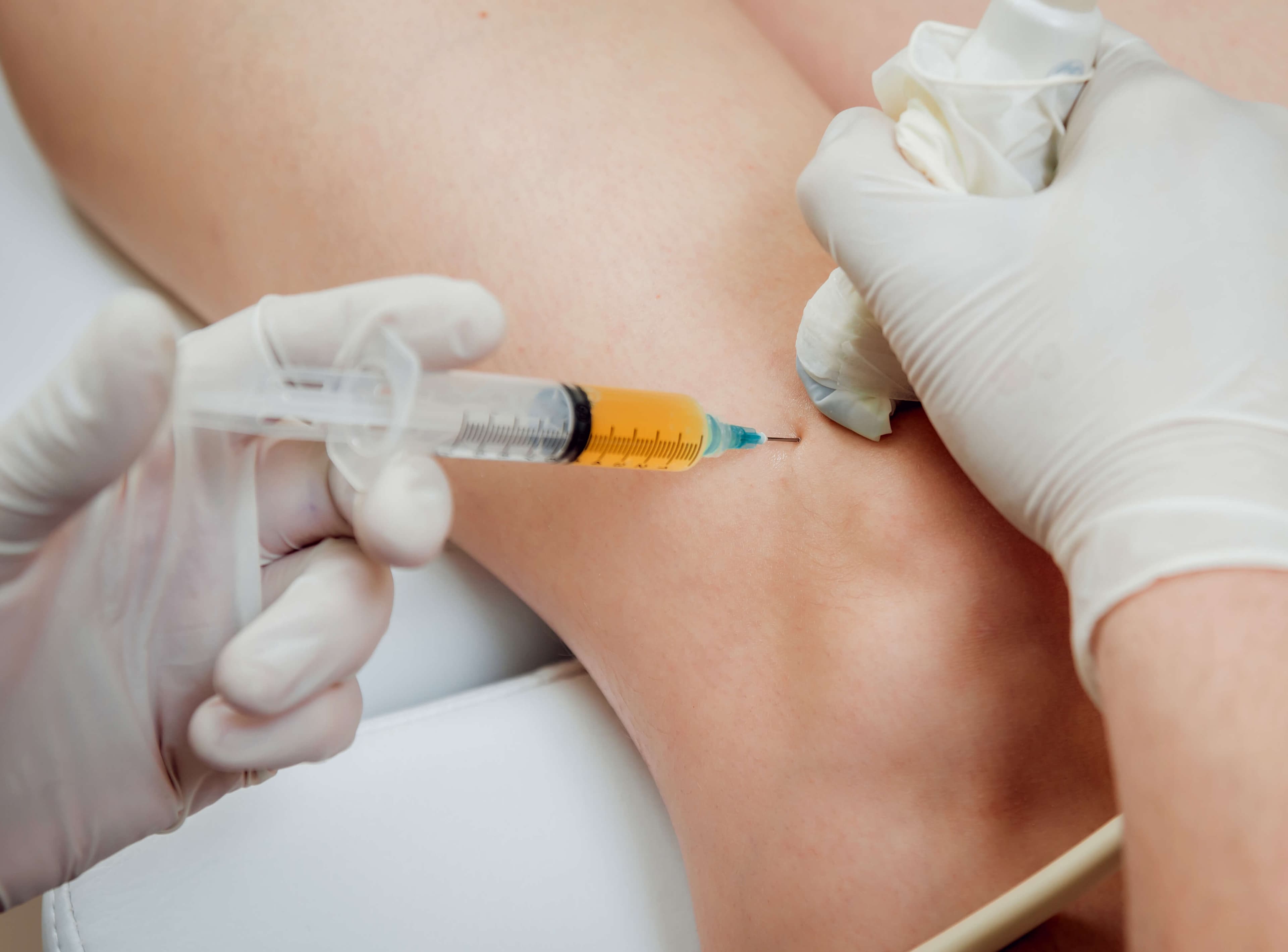
Joint Injections
Image-guided hip injections, including PRP and Arthrosamid, where the question is preservation rather than replacement.
Read more
Recovery Optimisation
Prehabilitation, sleep, structured progression — how the soft-tissue envelope and biological recovery work together.
Read more
When replacement is right, the technique matters
SPAIRE keeps what does not need to be released
Same implant, better surgical envelope, fewer restrictions afterwards. The conversation is whether replacement is the right answer at all — and if it is, how to do it well.